Welcome Back! Now, Where Do We Begin?

A 2L’s Take on Lessons Learned & Lessons Still Learning

So, if you’ve made it here, you’re likely one of four people: a 1L hoping to discover the secret to surviving your first semester as a “reasonably prudent person under the same or similar circumstances” (if you’re there yet in Torts, you know, you know); a 2L like me, whose arms are sore from carrying around our Constitutional Law textbook; or a 3L or 4L who, upon hearing “bar prep,” is already trying to change the subject. Either way, you’ve made it this far, and I promise this reading doesn’t require your Bluebook.

My name is Rose Edenfield, and I have the pleasure of writing for The Blackacre Times this year. I wanted my first post to start by saying: welcome back (or welcome to) law school! Regardless of what year you’re in, it seems like we’re all faced with the same balancing act as the school year kicks off: new classes, plenty of reading, applying for or starting new jobs and externships, spending time in clinics and extracurricular organizations, and, somewhere in all of that, maintaining a social life outside of this building.

Needless to say, we all have our own ways of coping with the ever-full agenda of a law-school semester. I, as a teacher in my past life, love to color-code my calendar, classes, and even my highlighters when briefing different parts of cases. But I know plenty of people who find their routines in their Outlook calendars, the Reminders app on their phones, or even those last-minute texts from their group chat.

Speaking of study groups, if you don’t feel like you have one yet—or haven’t even thought about the idea of letting new people into your life—you’re not alone.

When I started law school last year, I spent most of my time on the 6th floor (shout-out, but quietly) reading, briefing, and taking notes by myself. I turned down plenty of opportunities to spend time with friends outside of school because I thought I needed to review my case notes for the fifth time that week. When finals came around in December, I didn’t huddle up with a group of friends and spend late nights over coffee reviewing our outlines until 2 a.m. I thought I did my best work on my own. After all, wasn’t I the only one taking my exam?

Boy, was I wrong.

When grades came out in January, I remember thinking, “Wow. Was all of the time and effort I sacrificed last semester all for nothing?” In hindsight, I know it wasn’t. My grades were fine, I got a great job for the summer, and life went on! But in that moment, I didn’t know how I would ever recover. Over the next few days, I came to realize that I needed to adopt a different perspective for the semester.

I was still—and still am—an avid 6th-floor resident, but I started spending lunch with my friends in our favorite study room talking about things that had absolutely nothing to do with school. Some days, I went home immediately after class and camped out on my couch for hours watching TV. I took time on the weekends to focus on the relationships I had outside of school and reminded myself who I was apart from being a student or colleague.

When finals season came around, I was lucky enough to spend countless hours with my study group re-teaching concepts to each other, reading our class notes while devouring countless snacks, and peer-reviewing each others responses to practice questions. I felt like I had genuine moral support, and the weight of the world no longer felt like it was sitting entirely on my shoulders.

When I got my grades back, I saw improvement. More importantly, I realized that while changing my approach to exam preparation helped (more to come in later posts!), I couldn’t have done it without the people I had around me at the end of 1L.

All of this to say: it is totally okay—and necessary—to spend time by yourself and focus on your goals. But don’t forget to look up from your laptop every once in a while and realize that you have an entire community around you that wants to help you reach them.

Maybe that’s one of the biggest lessons I’m carrying with me into 2L: you don’t have to figure it all out on your own. And if you’re starting law school for the first, second, third, or fourth time this year, neither do you.


Lucky to Be at GSU: Free Scanning on the 5th and 6th Floors

Lucky for us, the Law Library provides free scanning machines on both the 5th and 6th floors in case you need to scan some class notes or just prefer your materials digital. 

Scanners are located in Room 502 and Room 601, and you can send scans directly to your email address or save them to a flash drive. Free scanning can be especially helpful when working with printed handouts from professors or working on collaborative assignments in class. It can also ensure you stay super organized by keeping everything in a digital, easy to access format. 

These scanners not only make day-to-day tasks much more convenient but also reduce unnecessary expenses for GSU’s law students. How lucky are we?

Lucky to Be at GSU: Course Reserves

Forgot to do your reading? Left your casebook at home? Still waiting for it to arrive? You’re in luck.

The Law Library’s Course Reserves collection allows students to check out course textbooks directly from the library.  These materials can be checked out for three hours at a time.

Course Reserves are especially helpful during busy weeks when you may need temporary access to a book for reading or reviewing before class, or on days your backpack is already stuffed with big books (like Con Law days). They are also a useful backup if you are sharing a book or waiting on your shipment to come in because of a back order.

Missing a reading assignment because of a logistical issue can add unnecessary stress to the already stressful environment of law school. Having course textbooks available in the library ensures that you always have a way to stay on track. Access to Course Reserves is just one more reason we are lucky to be at GSU!

Lucky to Be at GSU: Computer Lab

You may not know this, but on the 5th floor of the Law Library, you can find a dedicated computer lab reserved exclusively for law students. The lab provides access to the ENTIRE Adobe Suite (think Photoshop, Premiere, Illustrator, etc.) as well as easy printing straight to the library printers. Of course, you can use computers to conduct any research or studying that you would normally do in preparation for your classes or jobs.

Reliable access to research tools and technology is essential in law school. Luckily, the 5th floor computer lab is just another resource that the Law Library provides that may give you a little more luck when doing legal research and writing!

Lucky to Be at GSU: Reference Desk & Research Help

To kick off the “Lucky to Be at GSU” series, the Law Library wants to highlight one of the most valuable resources in the building: research assistance.

Legal research can be time consuming and often incredibly frustrating. Whether you are searching for an on-point case, tracking down a specific statute, or trying to determine whether something is still good law, you do not have to figure it out alone.

The reference desk is staffed from 8:30 a.m. to 8 p.m. Monday through Thursday, 8:30 a.m. to 5 p.m.​​ on Fridays, and 1 p.m. to 6 p.m. on Saturdays and Sundays with librarians and trained-student GRAs available to assist with research questions, source selection, or anything else you may need. If you are working outside of the staffed hours, help is still available. You can use the chat reference feature on the left side of the Law Library website, email questions to lawreference@gsu.edu, or call (404) 413-9102.

Sometimes a quick conversation can save you significant time on your research. Or maybe you just want to talk through a research strategy before you start.  Either way, having access to experienced research support is something we are truly lucky to have at GSU.

Book Display Breakdown: Women’s History Month

The College of Law Library is celebrating Women’s History Month with a book display dedicated to the women who have served on the Supreme Court.

115 people have served on the United States Supreme Court since its inception, and only 6 of them have been women, 4 of whom are currently serving on the court today. Nominated by President Ronald Reagan, Sandra Day O’Connor became the first female justice to serve on the Supreme Court in 1981. Since then, Ruth Bader Ginsburg, Sonia Sotomayor, Elena Kagan, Amy Coney Barrett and Ketanji Brown Jackson have all been confirmed to serve in the highest court of the United States.

Feel free to stop by and view the display, and possibly even check-out one of the books for yourself! The display is located next to the reference desk on the 5th floor. The featured books are:

Being Brown: Sonia Sotomayor and the Latino Question by Lázaro Lima.

Sonia Sotomayor: A Biography by Meg Greene.

Elena Kagan: A Biography by Meg Greene.

Sandra Day O’Connor: Justice in the Balance by Ann Carey McFeatters.

Notorious RBG: The Life and Times of Ruth Bader Ginsburg by Irin Carmon and Shana Knizhnik.

The Collars of RBG: A Portrait of Justice by Elinor Carucci and Sara Bader.

Reference:

Women on the Supreme Court. (n.d.). RepresentWomen. https://www.representwomen.org/women_supreme_court

Research Refresh: Building a Targeted Search

Introducing Research Refresh

Whether we like it or not, legal research is not a skill we learn once during 1L in Research Methods and never revisit. Instead, it develops over our entire careers, and small adjustments can make a noticeable difference in efficiency and accuracy. To help students hone their research skills, the law library is launching a new series called Research Refresh.

Each installment will focus on one practical research habit or skill, which can help students make the kinds of small changes that save time, improve research abilities, and reduce frustration. Some posts will cover foundational strategies, while others will highlight tools that are easy to overlook or you may have forgotten after your 1L year.

If there is a research skill you would like to see covered, or a question you have run into more than once, we welcome your suggestions. You can reach out to the reference desk or contact the law library directly with topic ideas!

Building a Targeted Search

To start the series off, this post provides guidance on how to reset or sharpen the ability to build searches to get targeted and on-point results without spending hours searching for the perfect case. This post will discuss choosing terms, using connectors, and considering jurisdiction.

Choosing Terms: By mid-semester, many students have settled into a research routine. You open Westlaw or Lexis, type in a general issue or a few keywords, and start scrolling. If the results are not great, you completely change your search. If they are overwhelming, you skim faster or add more to your search, potentially missing some helpful law. If you are caught in this cycle, it may be time to rethink your search terms before you hit enter.

One common mistake is not knowing when to focus on facts and when to focus on overarching legal concepts. If you are at the beginning stages of research, just trying to understand a general principle or lay out initial rule statements, your search terms should emphasize broader issues, areas of law, or recognized terminology rather than every fact from your scenario.  For example, instead of typing “neighbor tree damages trespass property,” you might search “trespass property damages” to capture the broader rules before narrowing. This way, you will avoid missing seminal cases on the issue or applications of the principle in different contexts.

Later on in the research process, however, the facts may become more helpful than the general concepts. Using precise facts from your pattern can lead to finding a case that is highly analogous, which can provide a powerful comparison in your memo or brief.  Include facts intentionally, but don’t overload your search with every minor detail. Think about which details are central to the legal issue and the court’s ruling.

Using Connectors: Another strategy to keep in mind is refining your search with connectors, making sure you are doing so to your advantage and not your detriment. Using Boolean terms like AND, NOT, and OR, or other proximity connectors thoughtfully can dramatically improve your search results. They allow you to combine several relevant concepts or focus on more targeted results. On the other hand, using connectors incorrectly can significantly change your results and cause you to miss valuable information. If you are not seeing what you expect, check your connectors before assuming the database has nothing helpful (sometimes small adjustments like adding parentheses or changing “or” to “and” make a big difference). See this research guide from Georgetown Law if you need a refresher on connectors.

Consider jurisdiction: Finally, consider jurisdiction at the beginning of your search. Narrowing to the correct court or state early can prevent you from spending time on persuasive authority when you need binding law.

Strong searches rarely happen by accident. Taking a few minutes to consider concepts versus facts, check connectors, and set jurisdiction can save hours of frustration later. If you need help developing search strategies for a current assignment, the law library is always available for research support.

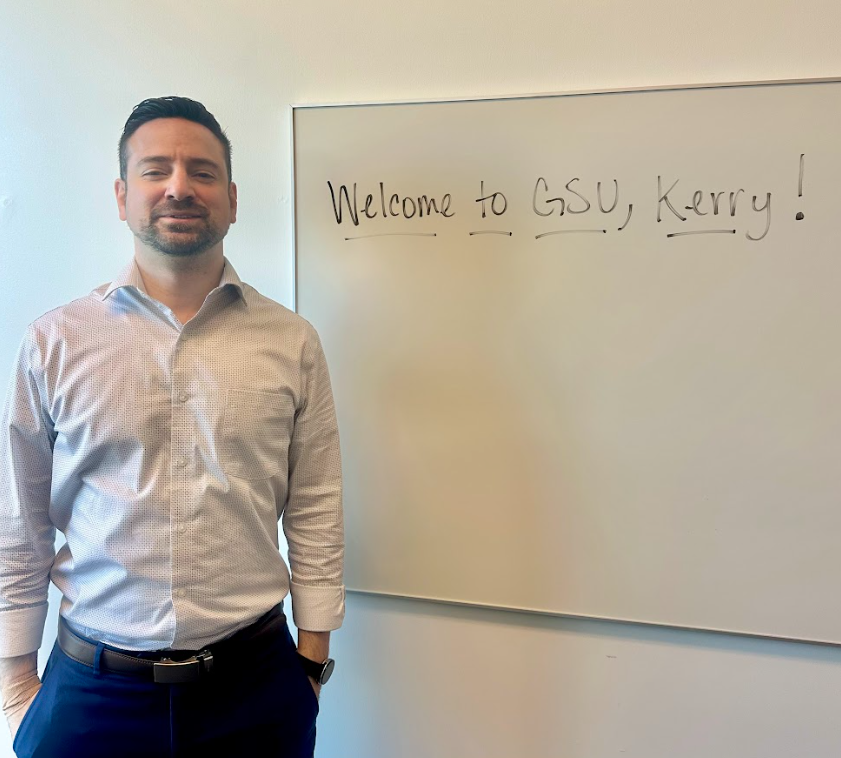
Meet Kerry Shibib

This post is the continuation of an “in-depth” interview series with new librarians and staff at Georgia State University College of Law Library. See earlier installments here.

We introduce our new librarians and staff at Georgia State University College of Law Library with a questionnaire invented by Austin Williams, which is borrowed in spirit, if not in part, from Marcel Proust’s famous questionnaire.

Alison: What is your name and what do you do?

Kerry: My name is Kerry Shibib. As Legal Technologies Librarian, I specialize in legal technology, teaching legal research, and serving as a law librarian.


A: How long have you been at Georgia State University College of Law Library? 

K: One month, but so far so good!


A: What books are currently on your nightstand (or Kindle)?

K: Lately I have been diving into books about machine learning and AI, like Deep Learning for Coders with fastai and PyTorch.


A: What is an interesting fact about yourself that you would like to share with our readers?

K: Taylor Swift is from my hometown, making her the second coolest thing to ever come out of Reading, Pennsylvania.


A: What is your favorite place in Atlanta (so far)?

K: I am really looking forward to living within driving distance of two Microcenters.


A: When you are not saving the world here at GSU Law Library, what do you enjoy doing outside of work?

K: I love building custom PCs and tinkering with technology generally. In other words, helping people by day and helping bring about the AI apocalypse by night.


A: Lastly, what is your favorite vacation spot? The place you go to leave it all behind for a few days.

K:The sloth sanctuary in Costa Rica!


There you have it, folks. The complete, unedited, behind-the-scenes interview with Kerry Shibib.

Focus Pocus: Study Aids to Cast Away Exam Fright

Exams creeping up on you? Feeling haunted by outlines that refuse to finish themselves? Grab your wand (or your laptop) and let the library’s study aids help you conjure some exam magic.

Summon Your Study Spirits (Online)

COL students have access to three main, spellbinding online study aid collections, all free through the library:

  • West Academic Study Aids – Coverage of almost every law school course. You will find case briefs, outlines, overviews, and exam prep titles, including the Acing series, video lectures, and interactive practice questions (Exam Pro), as well as Sum & Substance Audio lectures if you prefer to listen while you stir the cauldron (or commute).
  • Aspen Learning Library – Home to student favorites like Examples & Explanations, Emanuel CrunchTime, and Glannon Guides. You can read online or download chapters for offline use, perfect for late-night potion-making (aka outlining).
  • CALI Lessons – More than 1,000 short, interactive lessons and tutorials that test your knowledge topic by topic. Think of them as flash spells: small but powerful.

You can find them all on the Law Library’s Study Aid Finder, organized by database so you can search faster than a witch on a Nimbus 2000. Access it here: https://libguides.law.gsu.edu/az.php?q=study%20aids

For Those Who Prefer the Tangible Spellbook

Some of these digital resources also have physical copies right in the library. On the fifth floor, past the circulation desk and to the left, you will find a shelf on the back wall of all of the most recent editions of our most popular study aids. You can also visit the GSU Law Library online catalog and see what we have available in our physical collection.

The display pairs a few favorite print study aids with their online versions, so you can choose whichever format fits your study style—or try both!

A Few Reliable Spells

These are tried-and-true aids worth adding to your spellbook:

  • Examples & Explanations – Deep dives into doctrine with practice hypos.
  • Emanuel CrunchTime – Flow charts and quick review sheets perfect for finals week.
  • Glannon Guides – Engaging multiple-choice questions that walk you through the reasoning.
  • Acing Series – Streamlined and checklist-based for efficient review.
  • Sum & Substance Audio – Great for reviewing concepts while you’re on the move.

Don’t Let Exam Season Spook You

Study aids are meant to supplement, not replace, your class notes and outlines. Mix and match formats, test yourself often, and don’t be afraid to experiment until you find what works best.

Stop by the Focus Pocus display or scan the QR code on the handout to explore every study aid available. The law library has all the tools you need to bewitch your understanding and make this exam season magically… manageable.

Book Display Breakdown: Hispanic Heritage Month

In 1968, Congress voted to dedicate a week to celebrate the contributions and heritage of Americans tracing their roots back to the Spanish-speaking regions Spain and the Americas. In 1988, this celebration was extended to a month, beginning on September 15th to coincide with the independence days of several Central American nations. In modern times, the celebrations have grown to include those who identify under the umbrella of Latinx, who may not identify with the term Hispanic (for more information on the differences between Hispanic, Latinx, and Latine, see here). In celebration of this month, the College of Law Library has curated a selection of books related to Hispanic/Latinx heritage and history in the United States. The display is located next to the reference desk on the 5th floor, and all books are available to be checked out at the adjacent circulation desk. The books currently on display are listed below.

Sources: census.gov , hispanicmonth.org


Murder at the Sleepy Lagoon: Zoot Suits, Race, and Riot in Wartime L.A.

by Eduardo Obregón Pagán

“The notorious 1942 ‘Sleepy Lagoon’ murder trial in Los Angeles concluded with the conviction of seventeen young Mexican American men for the alleged gang slaying of fellow youth Jose Diaz. Just five months later, the so-called Zoot Suit Riot erupted, as white soldiers in the city attacked minority youths and burned their distinctive zoot suits. Eduardo Obregn Pagan here provides the first comprehensive social history of both the trial and the riot and argues that they resulted from a volatile mix of racial and social tensions that had long been simmering. In reconstructing the lives of the murder victim and those accused of the crime, Pagan contends that neither the convictions (which were based on little hard evidence) nor the ensuing riot arose simply from anti-Mexican sentiment. He demonstrates instead that a variety of pre-existing stresses, including demographic pressures, anxiety about nascent youth culture, and the war effort all contributed to the social tension and the eruption of violence. Moreover, he recovers a multidimensional picture of Los Angeles during World War II that incorporates the complex intersections of music, fashion, violence, race relations, and neighborhood activism. Drawing upon overlooked evidence, Pagan concludes by reconstructing the murder scene and proposes a compelling theory about what really happened the night of the murder.”–provided by publisher

The Latino/a Condition: A Critical Reader

edited by Richard Delgado and Jean Stefancic

“All too often, groups who do not effectively define themselves find that others assume the power to explain them. Until recently, this has certainly been the case with American Latinos/as, as evidenced by demeaning media stereotypes and the group’s near-invisibility in U.S. history texts. Indeed, as the demise of the Soviet empire shifted America’s national anxieties to domestic irritants, images of Latinos/as changed for the worse. Immigration reform acts in 1965 and 1986 brought millions of new immigrants from Latin American countries. By the end of the 1980s, their presence had become vexing to many. English-only movements sprang up. Bilingual education came under attack. Movements to close the border gained momentum. Now, Latinos/as are speaking back. The Latino Condition brings together some of these new voices, and some of the pioneers, in law, sociology, history, politics, and literature.”–Amazon.com

Harvest of Empire: A History of Latinos in America

by Juan Gonzalez

“A sweeping history of the Latinx experience in the United States. The first new edition in ten years of this important study of Latinos in U.S. history, Harvest of Empire spans five centuries–from the European colonization of the Americas to the 2020 election. Latinos are now the largest minority group in the United States, and their impact on American culture and politics is greater than ever. With family portraits of real-life immigrant Latino pioneers, as well as accounts of the events and conditions that compelled them to leave their homelands, Gonzalez highlights the complexity of a segment of the American population that is often discussed but frequently misrepresented. This landmark history is required reading for anyone wishing to understand the history and legacy of this influential and diverse group.”– provided by publisher.

Hispanic Americans in Congress, 1822-2012

prepared under the direction of the Committee on House Administration of the U.S. House of Representatives, Daniel E. Lungren, chairman, Robert A. Brady, ranking minority member, by the Office of the Historian and Office of the Clerk, U.S. House of Representatives.

“A compilation of historical essays and short biographies about 91 Hispanic-Americans who served in Congress from 1822 to 2012”–provided by publisher.

Being Brown: Sonia Sotomayor and the Latino Question

by Lázaro Lima.

“Sonia Sotomayor is the highest-ranking Latino/a in the United States. Her story of accomplishment and rise to the pinnacle of American public life seemed to herald a profound cultural and historical shift. Latinos are America’s largest minority and also its most disenfranchised. For many, Sotomayor’s ascent represented the elusive fulfillment of an American dream. A chronological narrative of her extraordinary life, Being Brown juxtaposes Sotomayor’s phenomenal successes with the twists and turns of minority inclusion in American democracy. Lázaro Lima also shows how Sotomayor’s own self-making as a Puerto Rican model of possibility allows us to understand not only the appeal but also the limits of representation. Culling through Sotomayor’s own writings, her Supreme Court dissents, and speeches, Lima questions what it means to have a powerful Latina in the Supreme Court. What does her ascent say about social mobility and inclusion? While Sotomayor’s story inspires hope, it also reveals much about the general lack of equality of Latinos and other disenfranchised communities”–provided by publisher.

Latino/a Rights and Justice in the United States: Perspectives and Approaches

by José Luis Morín.

“The U.S. Census Bureau has proclaimed Latinos as the “largest minority community” in the United States. Yet, biases and unequal treatment still plague this growing population, and its struggles to secure equal rights and justice remain largely unknown.

Linking international and domestic dimensions of the Latino/a presence in the United States, this book explores the historical and contemporary Latino/a experience of discrimination and economic and social injustice. Using Latino/a viewpoints, author Jose Luis Morin provides a deeper understanding of pressing issues within these communities, giving insights into the elusiveness of equality and fairness for Latinos/as in the United States. Morin also offers ideas on how to expose and reduce bias and other inequities within the justice system and the greater society.

In addition to presenting an alternative approach to working with Latino/a youths and families, this book calls for a broadening of existing concepts of rights and justice in the United States. In so doing, Morin incorporates international human rights norms and principles of economic, social, and cultural rights to address the persistent inequalities and injustices that Latino/a communities confront in the United States.”